
Description
ST. JOHN’S WORT (Hypericum perforatum)
Parts Used – Herb & flowers as infusion or poultice
Properties
- Anti-depressant
- Anti-spasmodic – Relaxes the nerves & reduces muscular contraction
- Cholagogue – Stimulates the flow of bile into the smaller intestines
- Astringent – Produces tissue contraction
- Sedative – Relaxes the nervous system
- Anti-viral
- Resolvent – Reduces swelling
- Expectorant – Increases the lungs’ phlegm production, making it easier to cough up
- Nervine – Calming effect on nerves, relieving anxiety
- Vulnerary – Used for toning & healing the skeletal & muscular system
- Anti-inflammatory
- Anti-microbial – Pesters micro-organisms that have invaded the body or skin
Uses
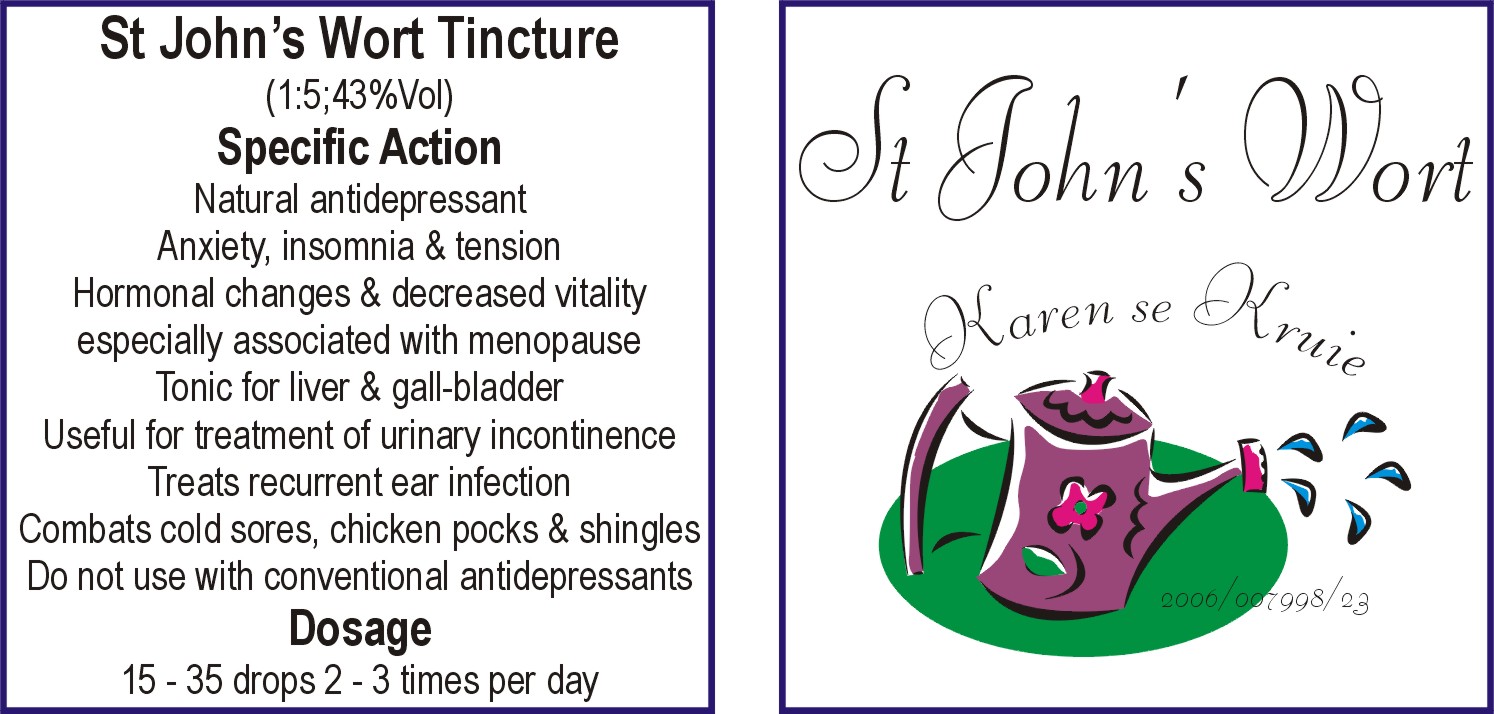
- Natural Prozac
- Internally: Mild to moderate depression, anxiety, insomnia & tension – Useful in hysteria
- Menopause problems – eases symptoms of hormonal changes & treats decreased vitality, irritability & anxiety
- Eases fibrositis, sciatica (heupjig) & rheumatic pains
- Helpful in anorexia
- Effective tonic for liver & gall-bladder
- Helps with chest problems
- Useful against diarrhoea
- Useful for the suppression of urine–bedwetting in children
- Useful in all pulmonary complaints & jaundice; Pulmonary consumption, chronic catarrh of the lungs, bowels or urinary passages
- Useful for recurrent ear infections
- Tea is good for anaemia & headache, uterine cramping & menstrual difficulties
- External: Wounds, bruises, first-degree burns, injured nerves, inflammations, ulcers, insect bites & cramps
- Lotion – Speeds up healing of wounds, bruises, varicose veins & mild burns
- Experimental: Viral Infections, researched in treating AIDS & HIV
- Used to combat cold sores, chickenpox & shingles
- Internally: Infused oil can be taken for colic, gastric inflammation & peptic ulcers
- Antibiotic action – possible food preservative
- Dysentery, Hydrophobia (Hondsdolheid) &Sciatica (heupjig)
- Eases menstrual problems
- Treatment for decreased energy & vitality
- Helpful for over-sensitive, over-tired students
Studies
- As effective as Prozac without side effects
- Helps with Seasonal Affective Disorder (SAD) – caused by lack of sunshine
- Treatment of PMS
- Treatment of Obsessive Compulsive Disorder
- Treatment of Menopause Symptoms
- Potent activity against viruses, including influenza, herpes, Epstein-Barr & HIV due to a more positive outlook, more energy, and less fatigue
Safety
- May cause mild stomach upset, fatigue, dry mouth, dizziness, skin rash & hypersensitivity to sunlight
- Minimise exposure to sunlight during use
- Not to be used in combination with other antidepressant drugs
- Not used before or after an organ transplant
- Avoid beer, red wine, cheese, yeast & pickled herring (Tyramine-containing foods) – Interacts negatively with MAO –inhibiting drugs
- Do not use during pregnancy & lactation
- Externally: Oil infusions made from fresh flowering tops
- 2-3 weeks needed to see effects
- Not for severe depression


